Pool CYA Explained: How Much Stabilizer Is Too Much?
“On a scale of 0-200 ppm, rate your CYA?”
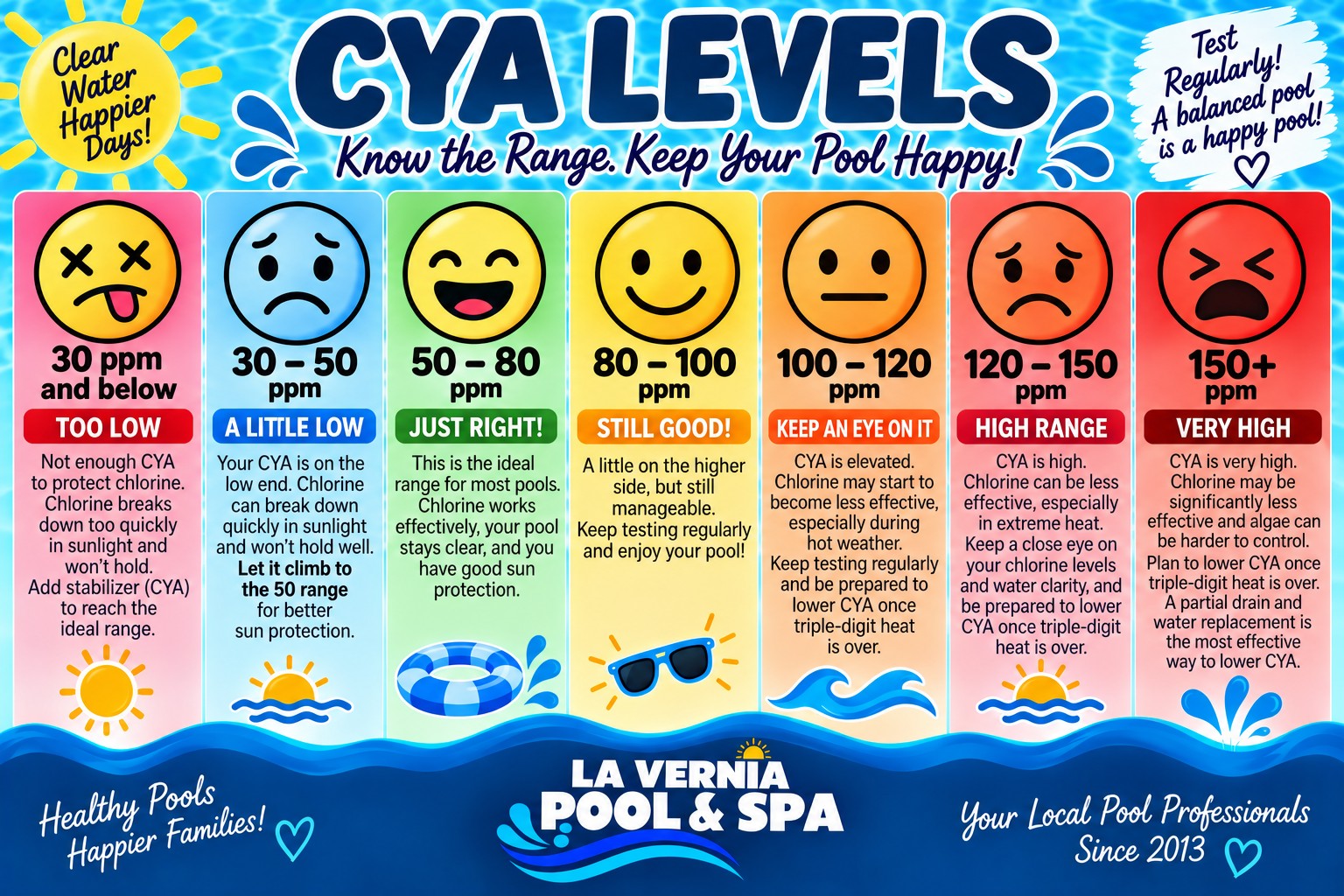
Pool CYA isn’t bad—it just needs to be managed.
Cyanuric acid (CYA), also known as pool stabilizer or conditioner, has an important job: it helps protect your chlorine from being destroyed by the sun. Here in South Texas, where our pools see plenty of intense sunlight, having the right amount of CYA can make a huge difference in how well your chlorine holds.
So, when should you add it—and how much do you really need?
To Add or Not to Add? When to Add Pool CYA/Stabilizer
1. Fresh Fill
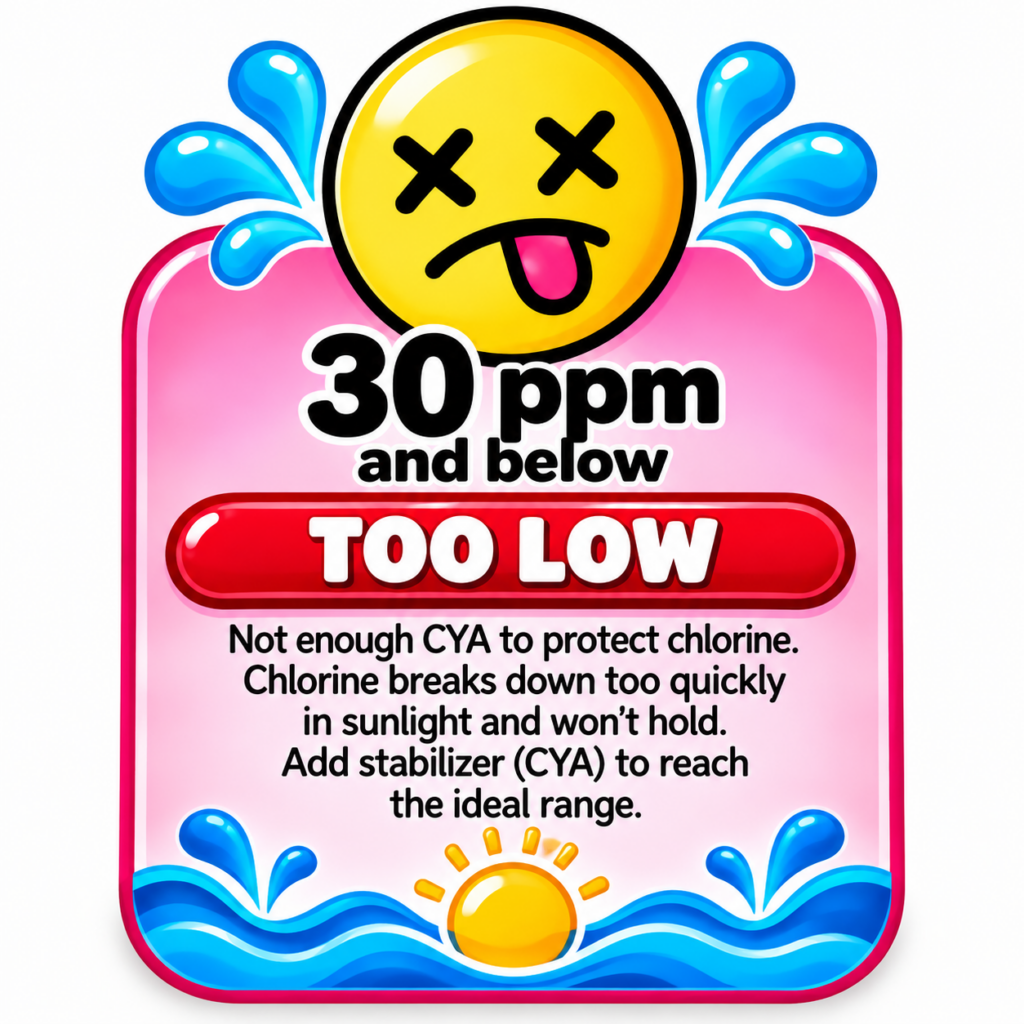
If you’ve just filled your pool with fresh water, test the CYA first. Fresh tap water will typically contain little to no CYA, so an outdoor chlorine pool will need stabilizer added to help protect its chlorine from sunlight.
For a traditional chlorine pool, we like to start conservatively around 30 ppm. Remember, we can always allow CYA to climb gradually as stabilized chlorine tablets are used throughout the season.
As a general starting point:
About 4 lbs. of granular pool stabilizer per 10,000 gallons will raise CYA from approximately 0 to 30 ppm.*
OR
About 1 gallon of liquid pool stabilizer/conditioner per 10,000 gallons may raise CYA from approximately 0 to 30 ppm.*
Always check the concentration and dosing instructions on your specific product. Stabilizer strengths can vary.
Granular vs. Liquid Stabilizer
Both products accomplish the same basic job, but they work a little differently. Granular stabilizer is usually the more economical option, but it dissolves slowly and may take several days to fully register on a water test.
Liquid stabilizers cost more but work much faster, making it a convenient option when you want chlorine protection sooner.
2. What About Saltwater Pools?
Yes—saltwater pools need CYA too!
A salt chlorine generator makes chlorine, but that chlorine still needs protection from the sun. Without enough CYA, the sun can consume chlorine faster, forcing your salt system to work harder to maintain an adequate chlorine level.
Saltwater pools commonly operate with a higher CYA range, often around 60–80 ppm, depending on the salt system manufacturer’s recommendations.
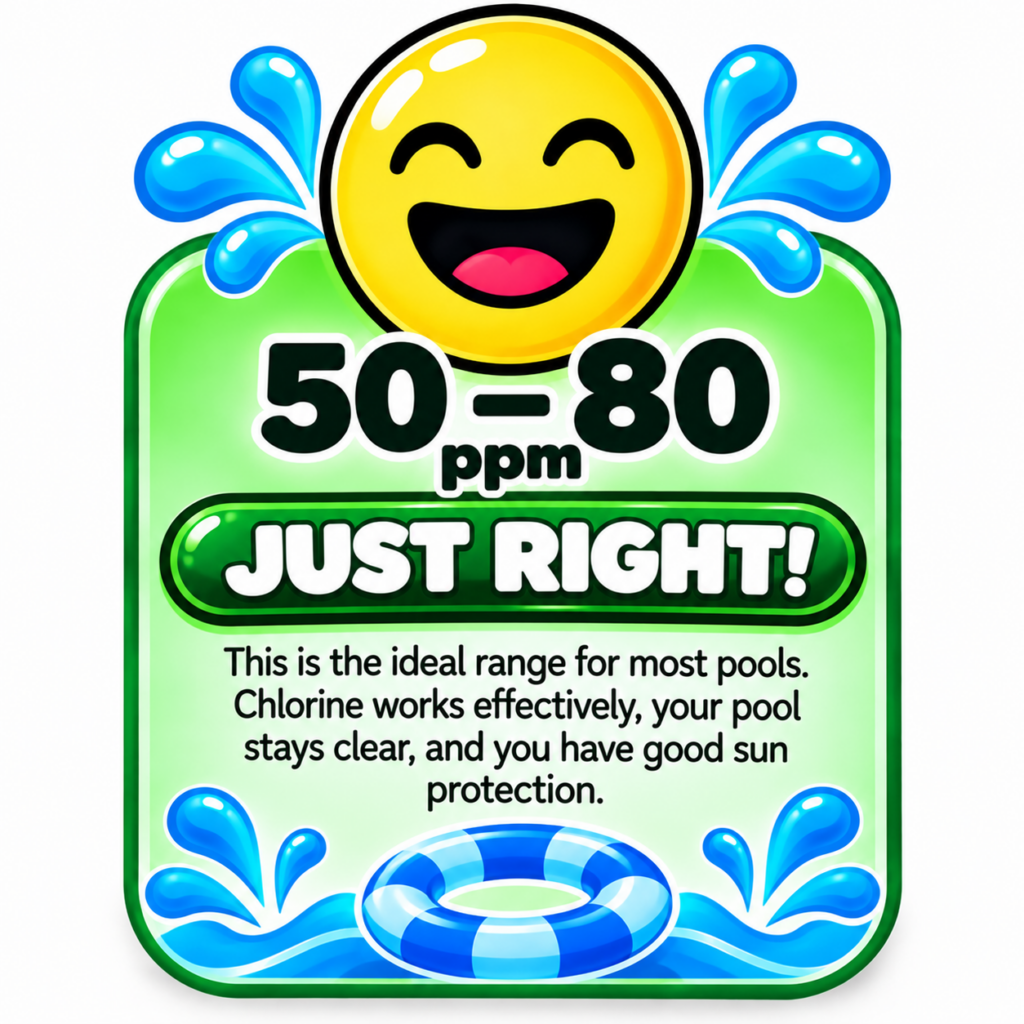
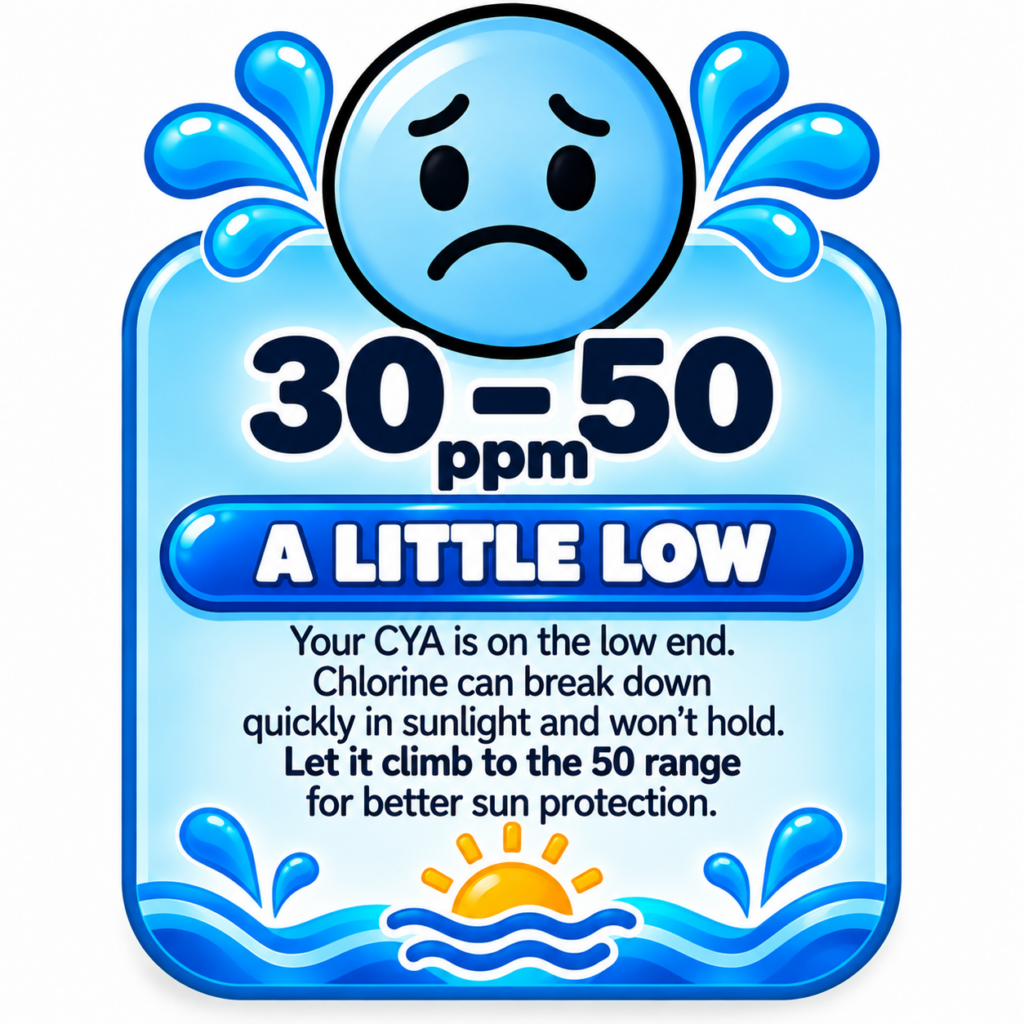
At La Vernia Pool & Spa, we generally recommend adding more CYA when it drops below 50 ppm.
The Tablet Trap
This is where we often see pool owners swing from ONE EXTREME TO THE OTHER, using too many tablets or barely using them at all. And unsurprisingly, underusing tablets often comes from having overused them in the past. Once someone has dealt with high CYA, they may become afraid to use tablets altogether.
But tablets aren’t the enemy. The key is finding the happy middle. Use them when your pool needs them, understand that they gradually add CYA, and keep an eye on your stabilizer level throughout the hot season. (Stay tuned for the NO TAB NOVEMBER announcement.) The goal isn’t no tablets—it’s smart tablet use.
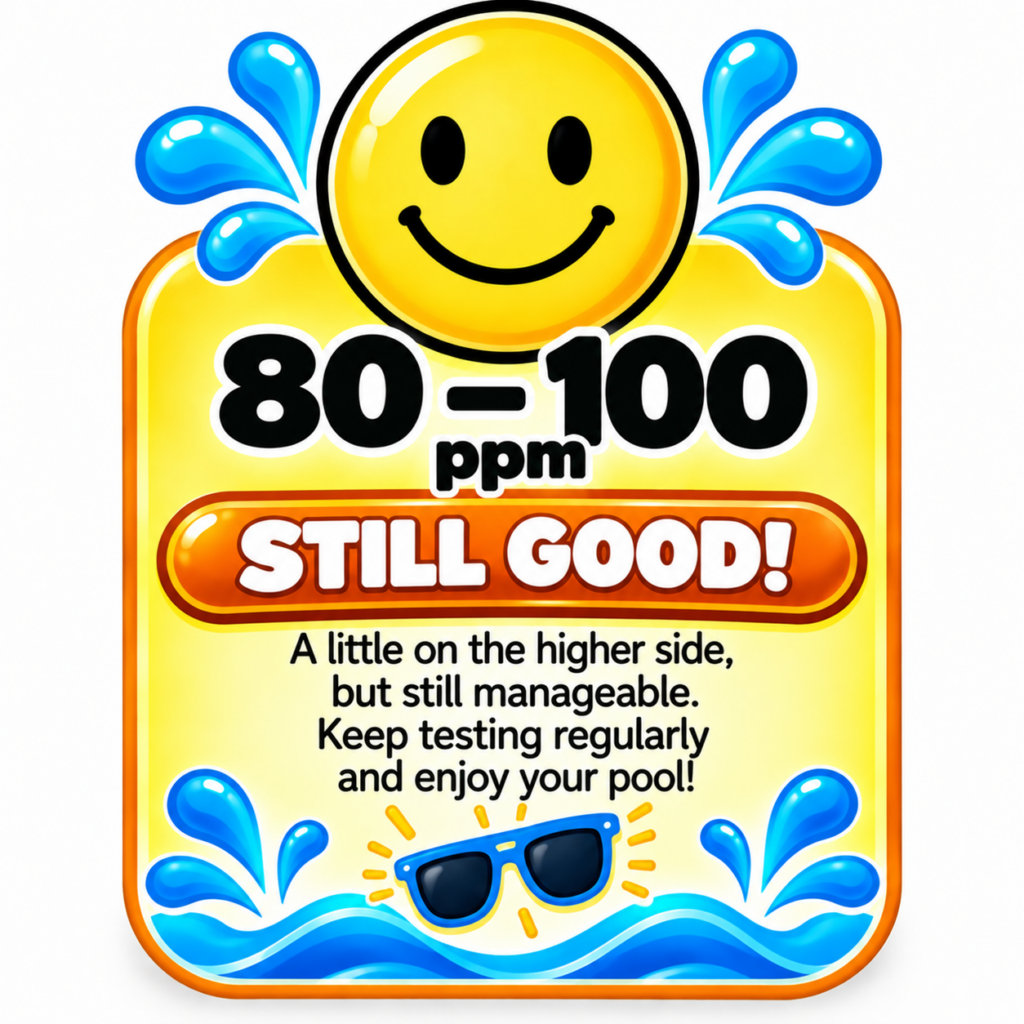
That being said, LETTING IT CLIMB, is going to be expected in the Summer Heat.
Like I always say:
“If you or someone you know has Chlorine Tablet PTSD YOU. ARE. NOT. ALONE!”
If we are conservative with tablet usage throughout the summer, then we can use the tablets as intended in this triple digit heat.
The CYA we watched so closely will rise. We know this. As long as we are consistently aware of CYA levels the rest of the year, then the panic doesn’t need to set in.
When is Pool CYA Too High?
Higher CYA changes how much free chlorine is needed for effective sanitation and can make shocking/algae cleanup more difficult. But there isn’t a magic number where chlorine suddenly stops working.
At 100+, we watch it. That’s it. I promise. No Scare Tactics.
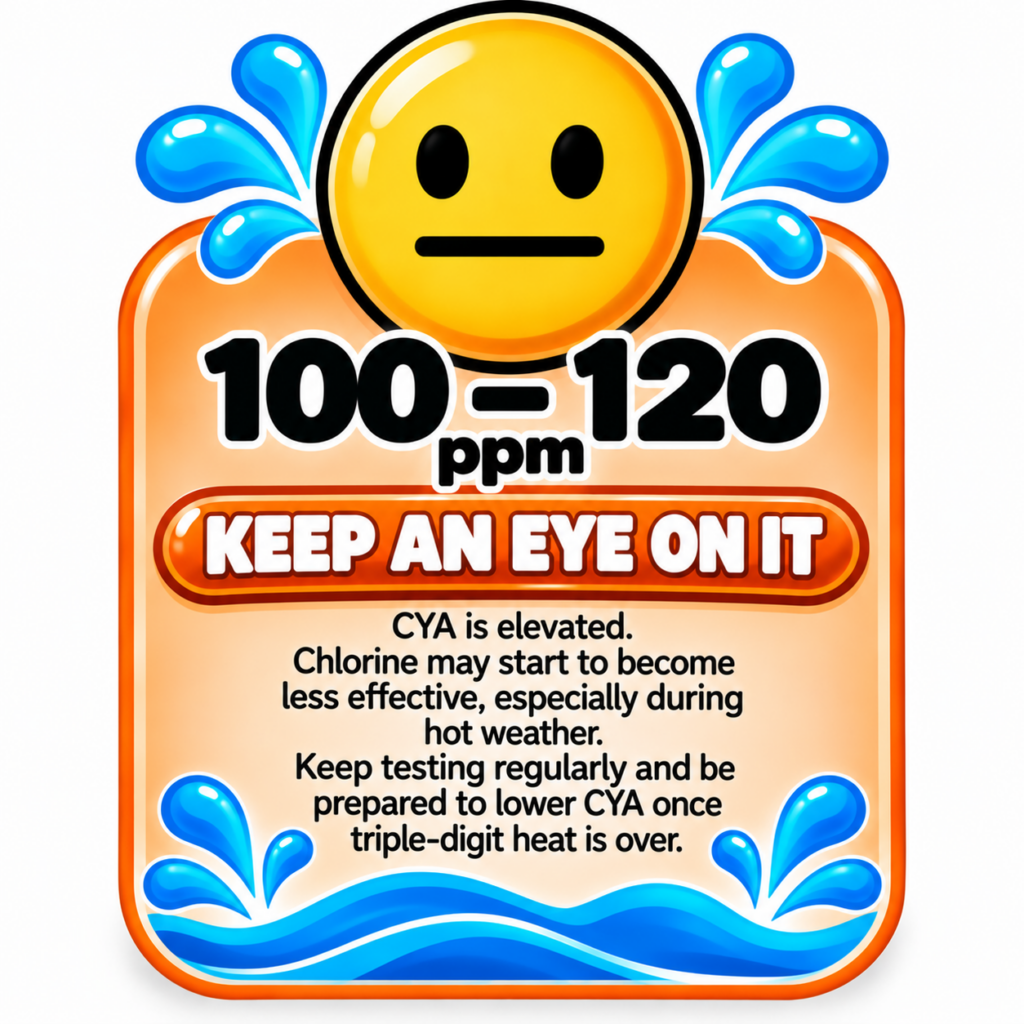
As it continues climbing—particularly toward 150 ppm and beyond—we start making a plan to lower it.
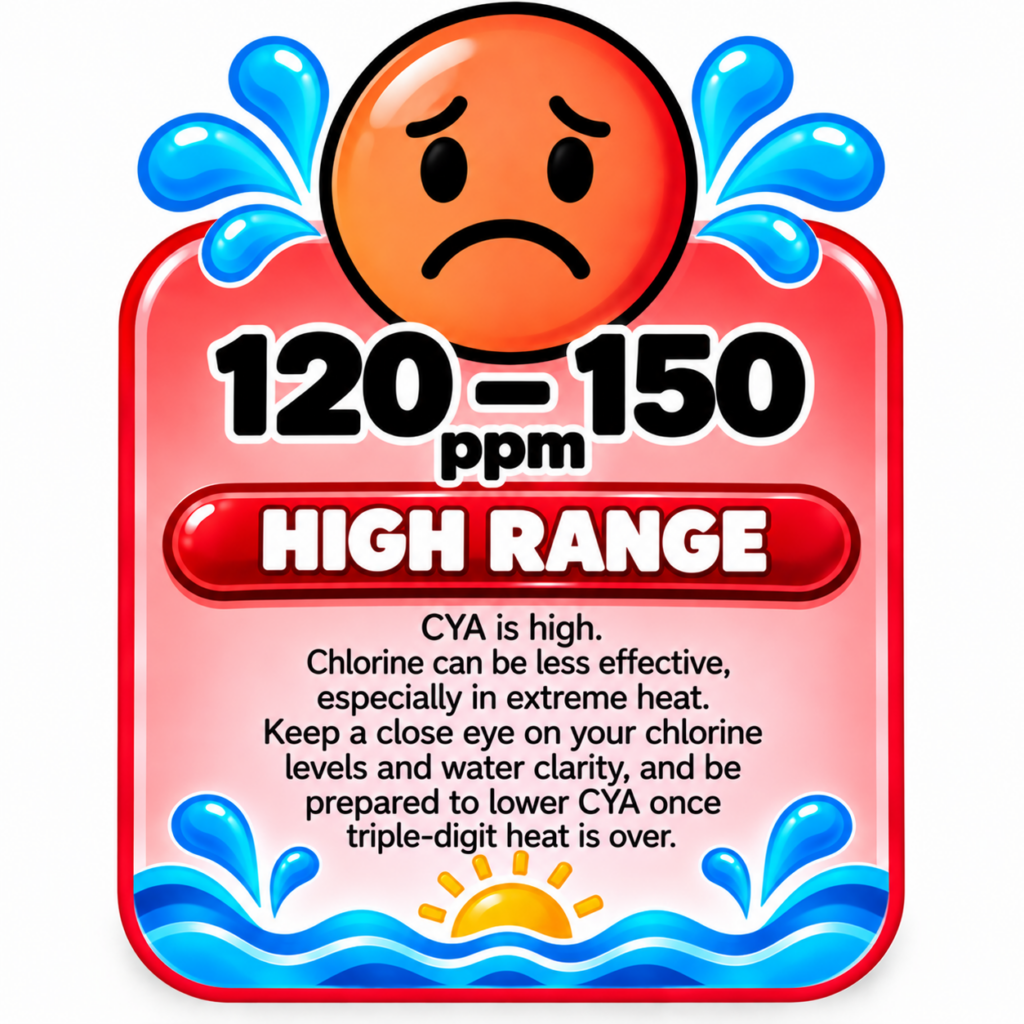
Chlorine CAN be less effective, but that doesn’t necessarily mean that I will ask you to stop using tablets in 105 degree heat and let you watch your pool turn green, only to blame it on high CYA.
We don’t do that here.
In fact, I will never tell you to drain your pool in the middle of this heat unless I am 1,000% certain you are in a Chlorine-Lock a.k.a. Shock-Lock.
Signs of Chlorine-Lock that We Look For…
Example 1: No Chlorine, High CYA, pool owner dumped 8-10 doses of Shock, and chlorine is still not registering on a water test next day. With no signs of better clarity and visible algae growth is still present.
Example 2: High CYA, chlorine is registering above 30 ppm with no signs of better clarity and visible algae growth is still present.
Why do I specifically look for these signs?
From my experience, I will see a crystal clear pool, holding normal chlorine levels and the CYA is over 200 ppm.
I have also seen a pool turn completely green and go into a shock lock with their CYA at 140 ppm.
So yes, before I look you in the eye with my deepest regrets and tell you one of the hardest pills to swallow as a pool owner, I want to be absolutely sure. Otherwise, it can wait until the winter months to lower your CYA.
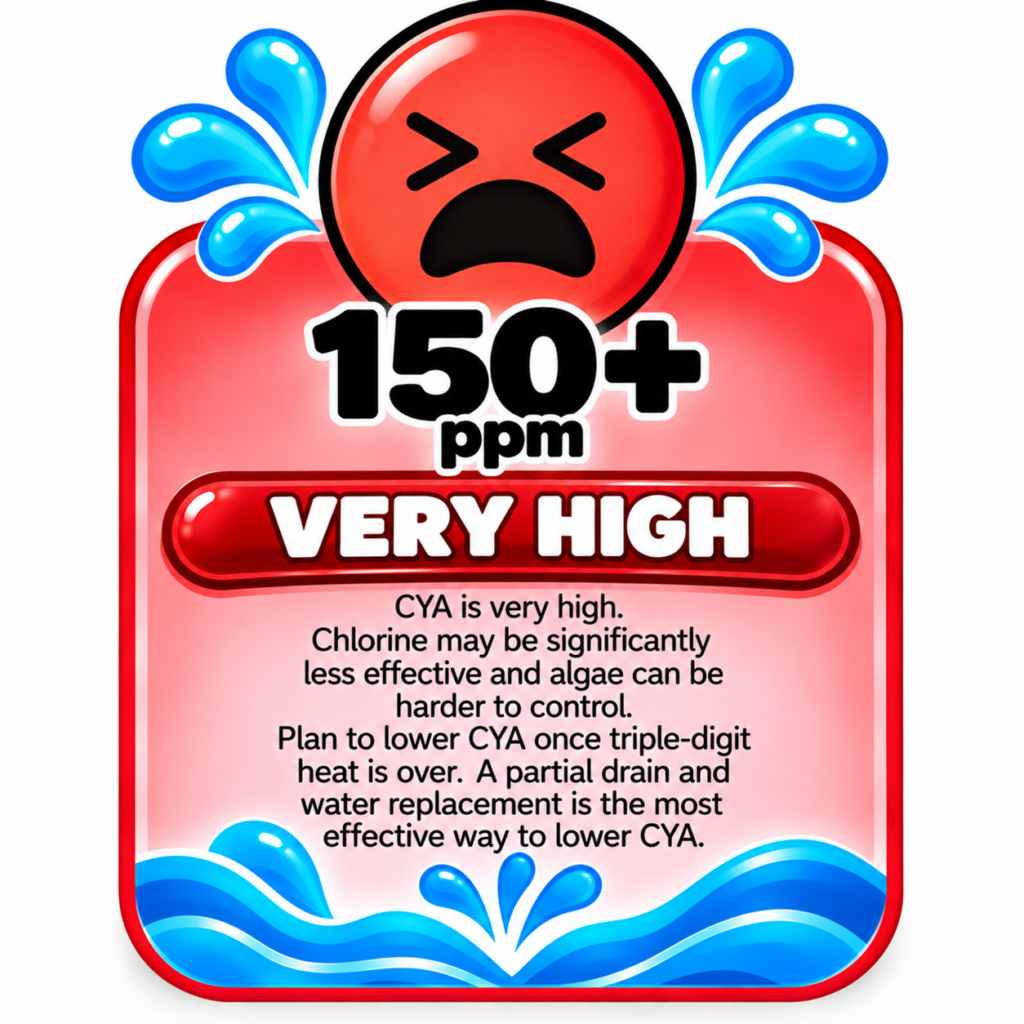
In Conclusion, I don’t claim to have this down to a science by any means. Just know that there is no magic number, every pool is different, and there is always a solution. I thrive on a challenge and CYA isn’t the boss of me. Let La Vernia Pool & Spa teach you how to make CYA work for YOU, not the other way around.
-Sincerely, Leslie